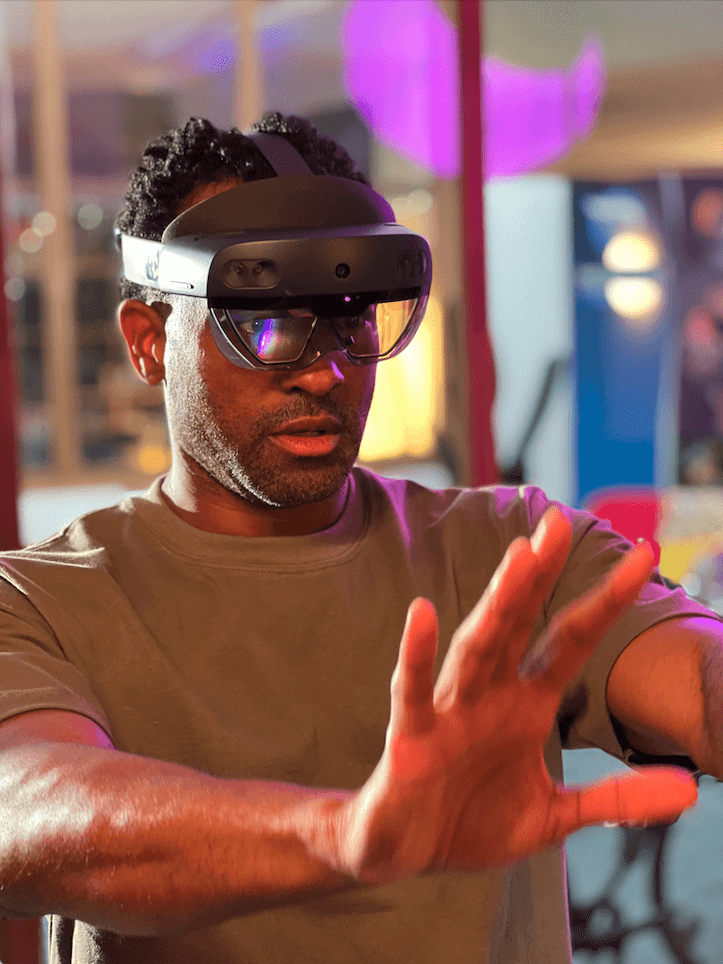
That is why hand tracking matters.
Hand tracking is often described as a feature, as if it sits next to better graphics, faster processors, or higher resolution displays. But that framing misses the larger shift. Hands are not just another input method for XR. They are the closest thing the medium has to a native interface.
When people can reach, grab, aim, throw, place, pinch, release, and move digital objects with their actual hands, the experience changes. It stops feeling like technology and starts feeling like behavior. The user is no longer translating intention through hardware. They are acting directly.
That distinction is not small. It is the difference between XR as a device you learn and XR as an experience you understand from the first moment.
Controllers Were Necessary. They Are Not the Destination.
Controllers helped bootstrap VR. They gave early developers a dependable input system. They gave players buttons, triggers, joysticks, haptics, and a familiar language borrowed from decades of console gaming. For early adopters, that worked. For core gamers, it still works.
But controllers also create a barrier.
The moment a user puts on a headset and picks up two controllers, they are asked to learn a new relationship between body, object, and action. Which button grabs? Which trigger shoots? Which joystick moves? Which menu opens? Which hand selects? Which button cancels?
None of that is impossible. But it is friction. And mainstream adoption is often decided by friction.
A controller asks the user to translate. The user wants to pick something up, but instead of simply picking it up, they must remember the correct input. The user wants to throw a ball, but instead of naturally releasing it, they must squeeze or let go of a trigger at the right time. The user wants to move through a menu, but instead of touching or reaching toward something, they must point a ray, press a button, or navigate an abstract panel.
Controllers are a bridge. They helped the category get here. But they are not where the category ends.
Hands Remove the Translation Layer.
The power of hand tracking is not that it feels futuristic. The power is that it feels obvious.
You do not press a button to grab. You grab. You do not squeeze a trigger to release. You open your hand. You do not need to learn what the device wants from you. The system learns to read what your body is already doing.
That removes a major layer of cognitive load. It also changes the emotional tone of the experience. Instead of feeling like you are operating software, you feel like you are participating in a space.
This is especially important for casual users. A seasoned gamer may tolerate a learning curve. A first time XR user may not. The first thirty seconds matter. If the user is confused, overwhelmed, or unsure what to do with their hands, the experience has already lost momentum. But when the user reaches out and the world responds, the product earns trust immediately.
The best XR onboarding is not a tutorial. It is a moment where the user discovers that their instinct works.
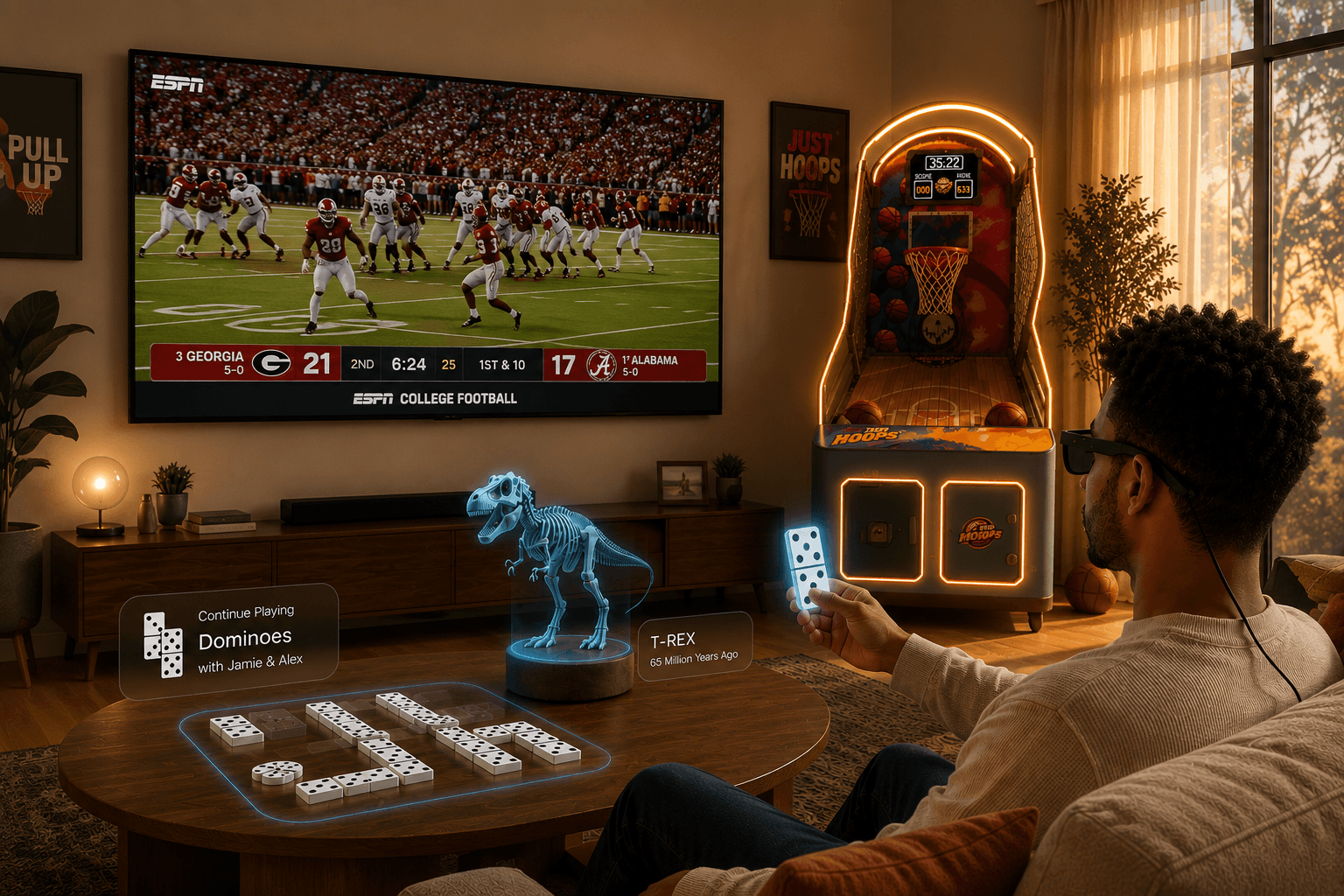
Hand First Design Changes the Game.
Designing for hands is not the same as taking a controller based game and adding hand support. That approach treats hand tracking as a secondary control scheme. True hand first design begins earlier. It starts with the question: what does this action feel like in the real world?
That question reshapes everything.
Throwing becomes more than a release input. It becomes weight, timing, arc, feedback, and follow through. Placing becomes more than selecting a coordinate. It becomes spatial judgment. Assembling becomes more than solving a puzzle. It becomes touching, rotating, testing, correcting, and learning through movement.
The mechanics have to be readable. The user should understand what an object wants them to do before a text prompt explains it. A ball invites throwing. A tile invites placing. A lever invites pulling. The design language has to come from the physical world, not from software menus.
This is where XR becomes its own medium. The most effective interactions are not symbolic. They are physical. The user is not pressing X to perform an action. The user is performing the action.
That raises the design standard. If an interaction uses hands, it has to respect what hands expect. Objects need the right scale. Targets need to be clear. Feedback needs to be immediate. Physics needs to feel consistent. The moment the digital world ignores the body, the illusion breaks.
Hand tracking does not make game design easier. It makes it more honest.
Onboarding Becomes Instinctive.
The mainstream XR audience will not behave like early adopters. They will not spend twenty minutes calibrating their expectations. They will not read long instructions. They will not forgive confusing interaction just because the technology is new.
They need to feel successful quickly.
Hand tracking compresses onboarding because the basic verbs are already known. Reach. Grab. Aim. Release. Place. Move. These are not gaming conventions. They are human behaviors. A child understands them. A parent understands them. A person who has never owned a game console understands them.
This is why hands are so important for casual play. The player does not need to think, “How do I use this?” They can think, “What do I want to do?”
That shift matters. It gives the experience a faster path to fun. It also gives the product a wider audience. The more natural the first action feels, the more likely people are to stay, repeat, and share.
Constraints Can Make the Product Better.
Hand tracking is not perfect. It has limits. Precision can be inconsistent. Occlusion can break tracking. Fast motion can create errors. Extended arm movement can cause fatigue. Some gestures feel natural once and annoying after repetition.
These constraints are real. They should not be ignored.
But constraints can make design better.
They force teams to simplify. They reward shorter sessions, clearer mechanics, larger interaction targets, stronger feedback systems, and more comfortable play patterns. They push design toward seated experiences, relaxed posture, and actions that feel good over time. They make developers ask whether a mechanic is truly necessary, whether a menu is too complex, whether an interaction is too small, or whether the player is being asked to perform for the system instead of being supported by it.
This is where hand tracking becomes a discipline. It pushes XR away from overbuilt interaction and toward clean product thinking.
The right question is not, “Can we track every possible movement?” The better question is, “Which movements feel natural, repeatable, and meaningful?”
That question leads to stronger design.
The Path to Everyday XR.
As XR moves toward lighter headsets and smart glasses, the interface has to become more natural, not more complicated. The future will not support a world where everyone carries dedicated controllers everywhere they go. That model belongs to a specific phase of VR. It does not map cleanly to glasses, casual use, public settings, or short daily sessions.
Hands do.
Hands are always present. They work across contexts. They support play, utility, communication, creation, and social interaction. They can scale from a living room headset to a tabletop mixed reality game to lightweight glasses that blend digital content into daily life.
This does not mean every XR experience must be hand only. Controllers will still matter for certain genres, especially where precision, speed, and haptics are essential. But for XR to reach beyond core users, the primary interface has to feel native to everyday life.
That is the broader opportunity. XR will not become mainstream because people learn a new device language. It will become mainstream when the device disappears behind familiar behavior.
Hand tracking is central to that shift. It changes the way games are designed. It changes how users enter an experience. It changes how menus work. It changes how players feel about their actions. It changes what kinds of products make sense for the next generation of devices.
Most importantly, it changes the promise of XR.
Not escape. Not complexity. Not technology for technology’s sake.
Direct interaction. Natural behavior. Digital content that feels close enough to touch.
The future of XR will not be controlled.
It will be handled.
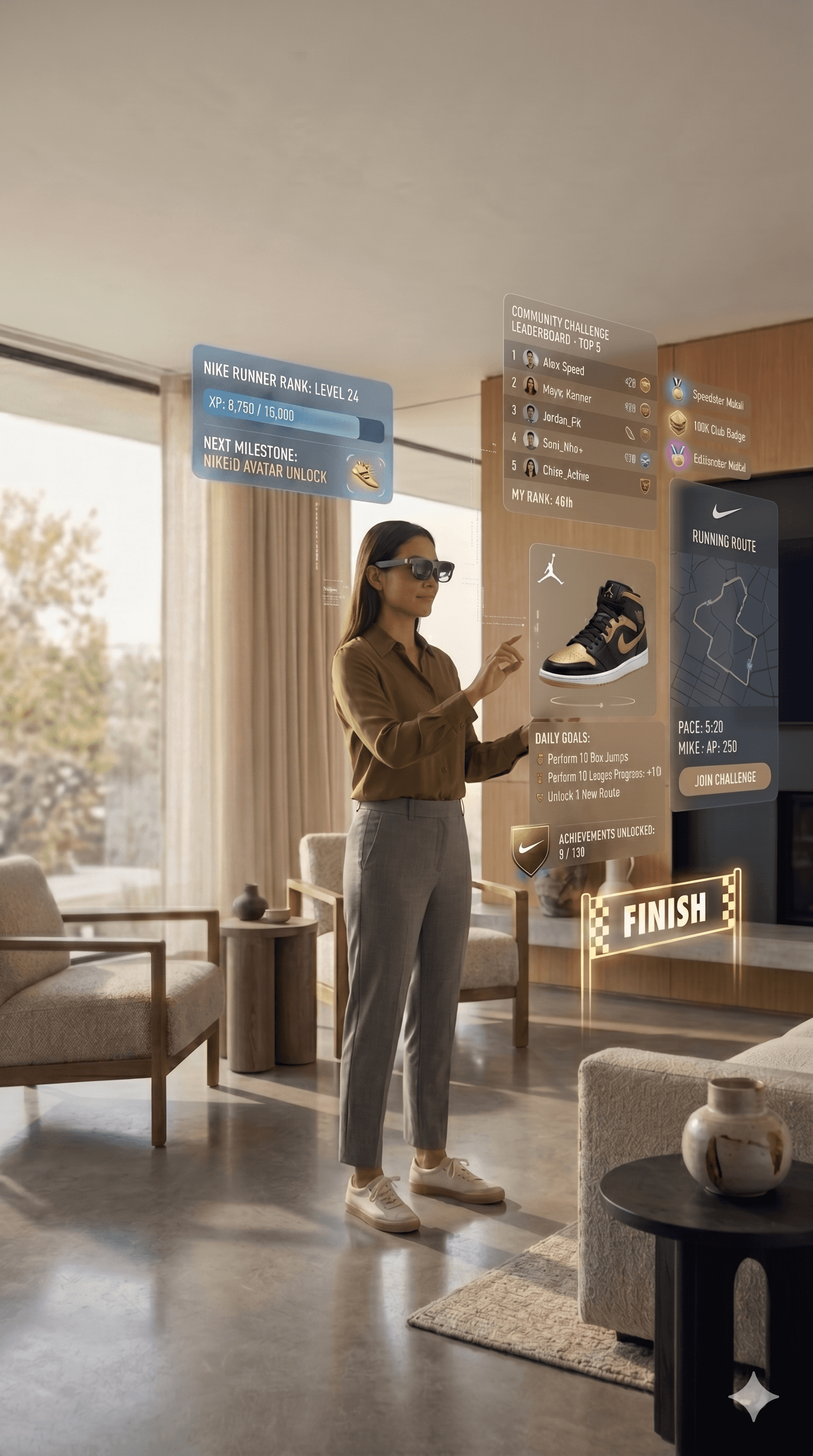
We build XR around human behavior.
We combine game design with real-world deployment