Mixed reality is often discussed through the lens of gaming, entertainment, or the next generation of consumer devices. That makes sense. Games are where new interaction models become playful. Entertainment is where audiences first understand why a new medium matters. Consumer hardware is where scale eventually happens.
But some of the most important lessons for the future of mixed reality are not being learned only in homes, arcades, or online worlds. They are being learned inside museums, heritage sites, cultural institutions, and historic spaces.
That may seem counterintuitive at first. Museums are not usually framed as the frontier of interface design. Heritage sites are not typically positioned as laboratories for spatial computing. But in practice, they are some of the most demanding and valuable environments for XR development.
A museum experience has to work for everyone.
It has to work for families, tourists, school groups, older visitors, people with limited mobility, international audiences, and people who have never put on a headset before. It has to be understandable within seconds. It has to fit into a physical space that already has meaning, constraints, history, architecture, and visitor flow. It has to tell a story without overwhelming the site itself.
That is what makes cultural spaces such powerful testbeds for mixed reality. They force XR to grow up.
Museums Do Not Tolerate Friction
One of the biggest challenges in XR is onboarding. In a game, players may be willing to spend time learning a control scheme. They may expect tutorials, menus, calibration steps, button mappings, and repeated attempts. In a museum, that tolerance is much lower.
A visitor may only have 30 minutes. They may be traveling with children. They may be part of a timed group. They may be unsure about wearing a headset. They may be excited by the idea of mixed reality but nervous about the technology itself.
That means the experience has to become legible almost immediately.
Where do I look? Where do I walk? What do I touch? How do I begin? What happens if I make a mistake? These are not small questions. They are the core design questions that determine whether mixed reality feels magical or confusing.
Cultural spaces make these questions unavoidable. A successful museum experience cannot hide behind novelty. It has to deliver clarity, comfort, story, and interaction in a format that feels natural to people who did not arrive as early adopters.
For studios, that constraint is valuable. It forces better interface design. It forces simpler gestures. It forces stronger pacing. It forces the technology to serve the visitor, not the other way around.
Real Spaces Make Mixed Reality More Meaningful
Mixed reality is at its strongest when it does not ask people to leave reality behind. The most powerful experiences are often the ones that make the physical world feel deeper, more alive, and more meaningful.
Cultural spaces are uniquely suited to this. A museum or heritage site already has a story. It already has architecture, atmosphere, objects, paths, and memory. Mixed reality can add a new layer to that world without replacing it.
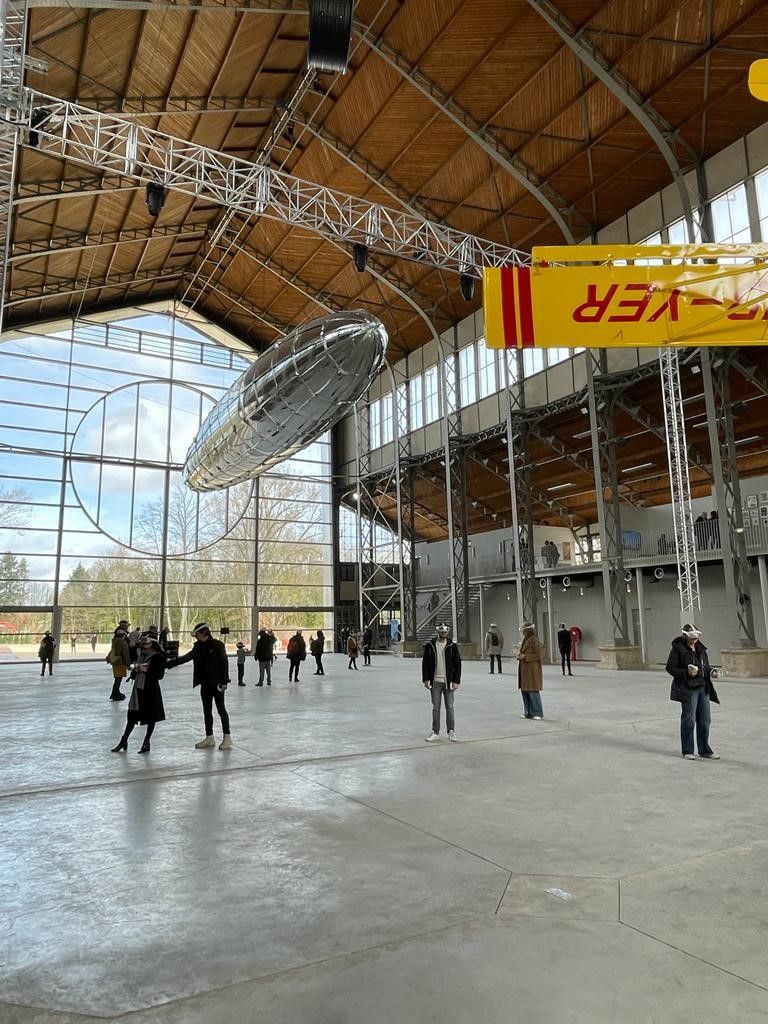
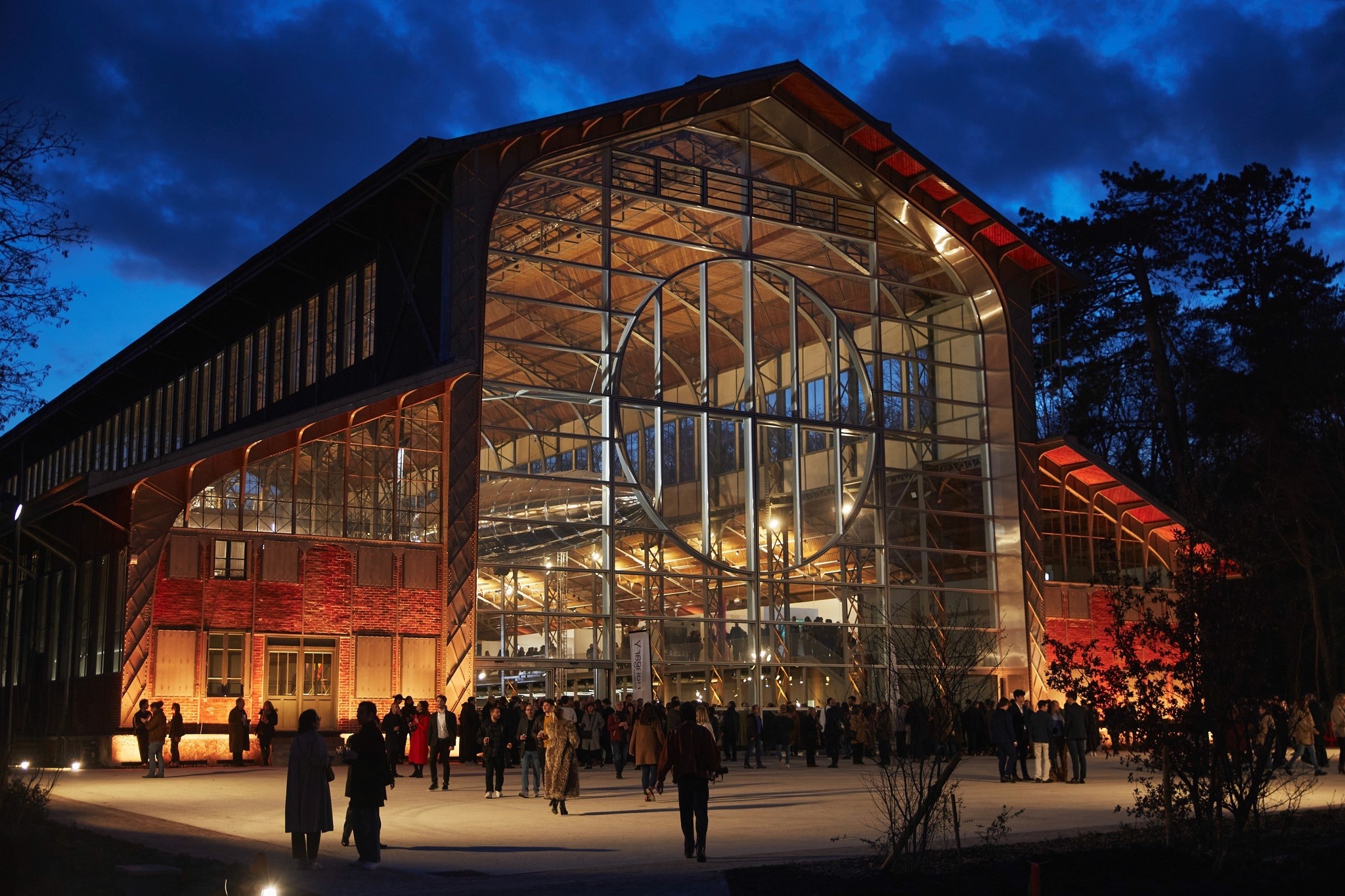
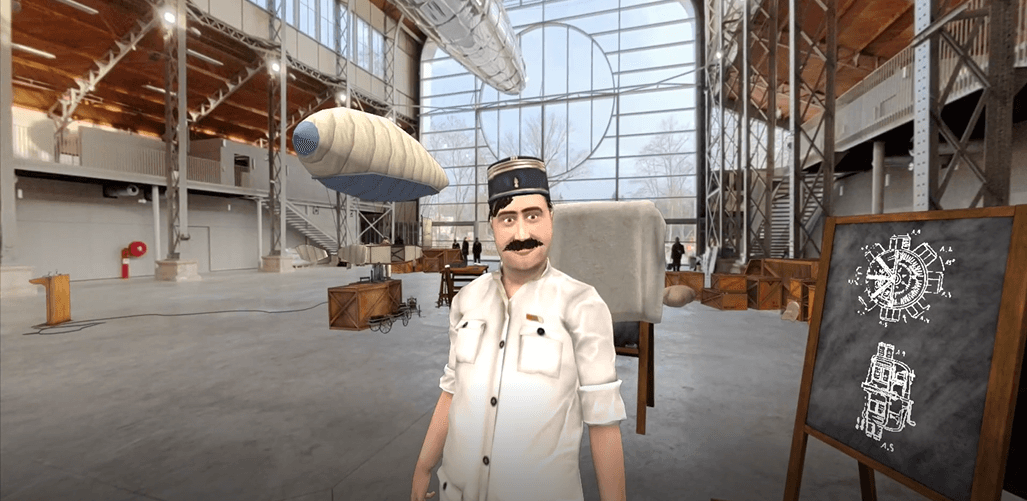
At Hangar Y near Paris, Realcast’s work used mixed reality to reconnect visitors with the origins of the historic site and the early history of aeronautics. The experience blended virtual storytelling with the real environment, allowing visitors to interact with historical objects, command virtual balloons, and encounter recreated events within the space itself.
That is a fundamentally different use of XR than placing someone inside a fully invented world. The physical site is not a backdrop. It is part of the interface. The walls, scale, light, pathways, and historical context all become active ingredients in the experience.
This is where mixed reality begins to separate itself from traditional virtual reality. It is not only about immersion. It is about relationship. The relationship between visitor and place. Between object and story. Between physical movement and digital response.
Cultural Spaces Teach Spatial Storytelling
A museum visit is already a form of narrative design. People move through a sequence. They encounter information in stages. They build context over time. They may start with curiosity, move into discovery, and leave with a deeper emotional or intellectual connection.
Mixed reality can strengthen that arc.
Instead of asking visitors to simply read about a historical moment, XR can let them stand inside a reconstructed event. Instead of viewing a static object, they can manipulate a digital layer that reveals how it worked, how it was built, or why it mattered. Instead of treating interpretation as something separate from the space, mixed reality can make the act of moving through the space part of the learning process.
Realcast’s cultural work reflects this approach. Across projects such as Hangar Y, Insurrection 1944, Chamarande, Citéco, and other heritage experiences, the emphasis is not just on showing digital content. It is on creating guided, interactive narratives that are anchored to place, shaped by movement, and designed for broad public audiences.
This matters because spatial storytelling is one of the central creative languages of XR. The future of the medium will not be defined only by screens floating in space. It will be defined by how people move through information, how stories unfold around them, and how interaction becomes part of memory.
Museums provide the perfect training ground for that language.
Accessibility Is Not a Feature. It Is the Foundation.
Cultural XR also reveals a truth that every mixed reality studio has to confront. Accessibility is not a secondary consideration. It is the foundation of adoption.
If an experience works only for confident technology users, it is not ready for the mainstream. If it requires long explanations, complex menus, or unnatural controls, it will struggle outside enthusiast audiences.
This is why hand tracking, spatial cues, guided progression, and simplified interaction matter so much. They reduce the gap between intention and action. They allow visitors to reach, point, grab, assemble, follow, and respond in ways that feel closer to normal behavior.
That is the larger promise of mixed reality.
Visitor Flow Is a Product Problem
There is another reason cultural spaces are so valuable for XR development. They expose the operational side of immersive design.
It is one thing to build a prototype that works for a single user in a controlled setting. It is another thing to build an experience that works all day, every day, with rotating visitors, headset management, staff mediation, physical safety, timed sessions, charging cycles, multiple groups, and real venue constraints.
This is where location based experiences become more than a business line. They become applied research.
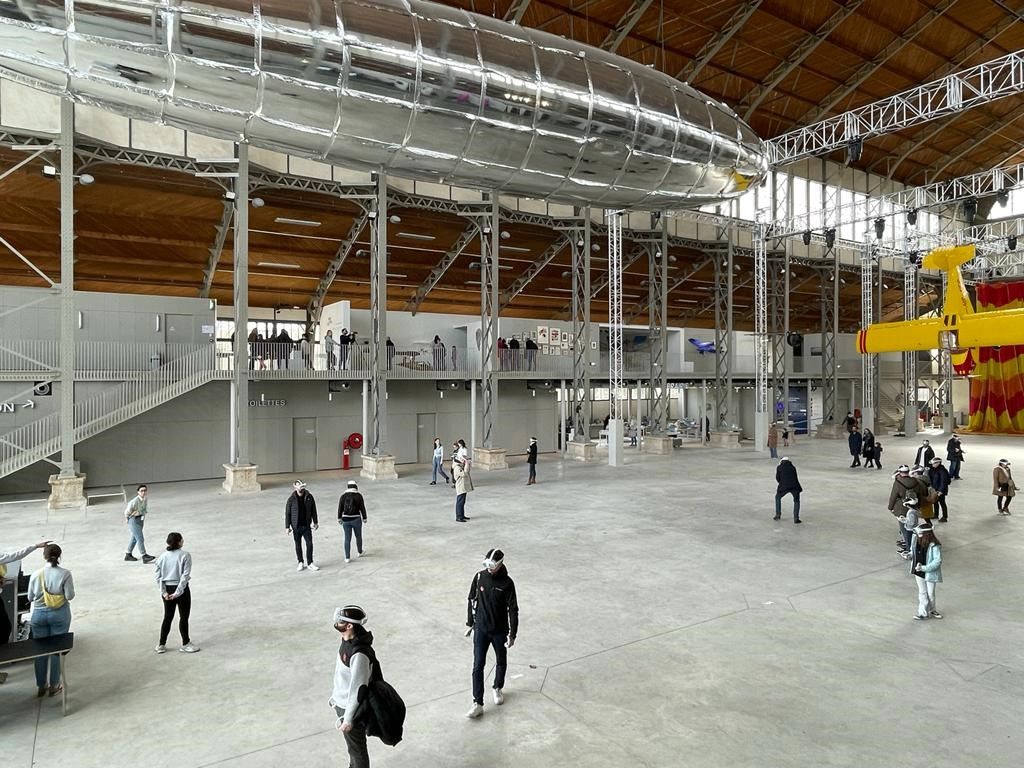
At Hangar Y, the scale of the site created a real spatial challenge. The experience had to manage an expansive physical environment, visitor flow, simultaneous groups, interactive moments, and accessibility for audiences of different ages. The project also relied on analytics, headset usage monitoring, staff training, maintenance protocols, and ongoing visitor feedback to keep the experience operating smoothly.
These are not side details. They are the conditions that determine whether XR can function in the real world.
The same design intelligence applies far beyond museums. Future mixed reality experiences in retail, education, sports, healthcare, entertainment, and public spaces will all need to solve similar questions. How do people enter? How do they know what to do? How do they share space safely? How does the system adapt to different levels of comfort? How does the experience stay consistent across thousands of users?
Cultural spaces force these questions early.
The Future of XR May Be Learned in Public
The cultural sector has always had to balance education, emotion, access, preservation, and public engagement. That makes it a powerful environment for new technology, but only when the technology respects the place it enters.
Mixed reality works in cultural spaces when it deepens attention rather than distracts from it. When it makes history tangible without turning it into spectacle. When it gives visitors a role inside the story without making the experience feel like a game they need to master.
That balance is difficult. But difficulty is exactly what makes these spaces valuable.
A museum visitor is not there to beta test a device. A school group is not there to admire a technical demo. A family is not there to decode an interface. They are there to discover, connect, learn, and remember.
If mixed reality can work there, it can work almost anywhere.
We build XR around human behavior.
We combine game design with real-world deployment

