The Next Era of XR Is Not Escape
For years, extended reality has been described as an escape. Put on a headset and leave the world behind. Step into another universe. Become someone else, somewhere else, surrounded by environments that have no connection to the room you are actually standing in.
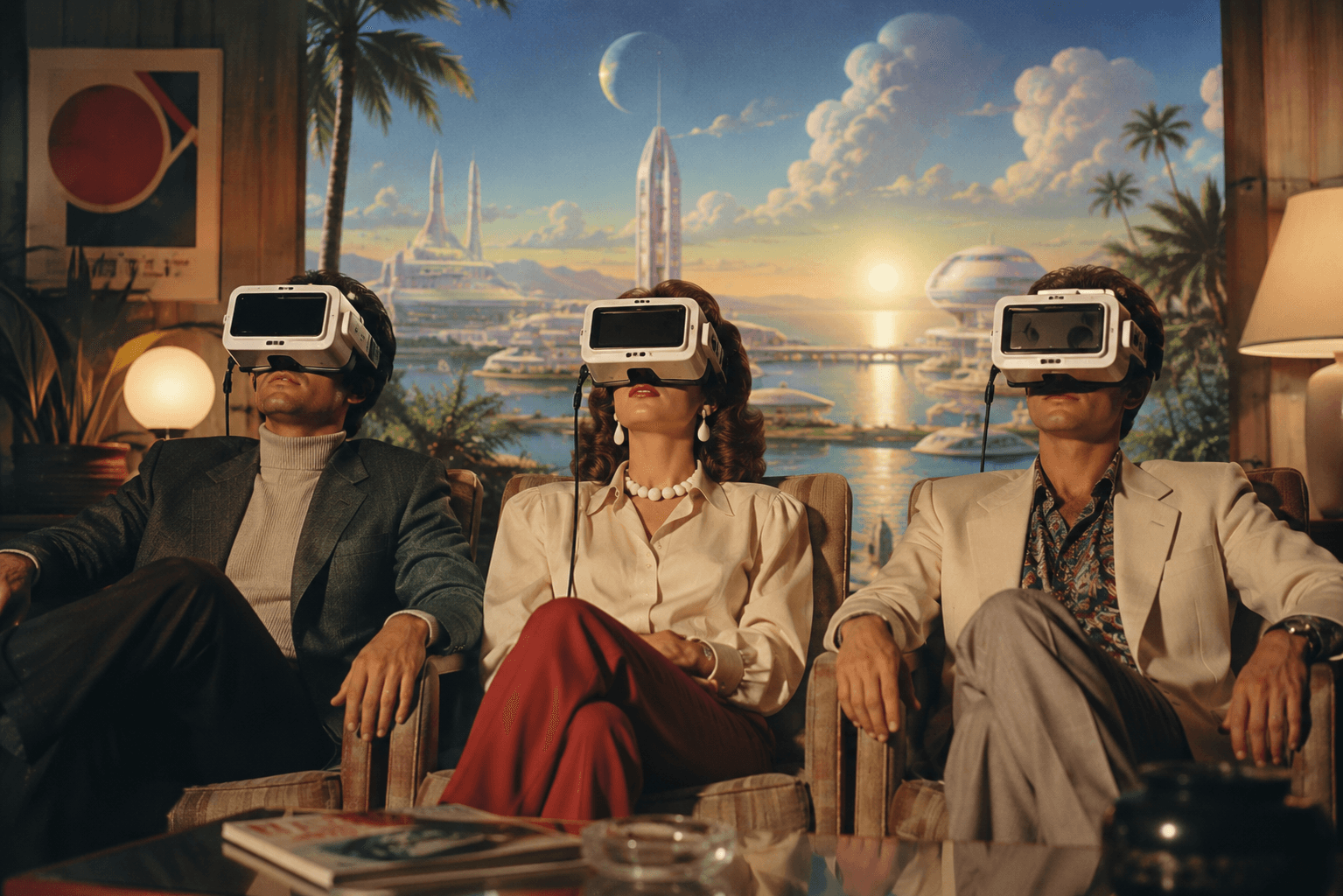
That vision still has power. There will always be value in fully immersive worlds, especially for fantasy, storytelling, training, and entertainment. But if XR is going to become a true mass market platform, its future cannot depend only on asking people to disappear from reality. The bigger opportunity is not escape. It is extension.
XR succeeds when it makes the world around us more interactive, more useful, more social, and more alive. It works best when it builds on the behaviors people already understand. Reaching. Grabbing. Throwing. Placing. Building. Sitting at a table. Playing in the living room. Looking across from another person. Using your hands the way you have always used them.
The most powerful version of XR is not one that replaces reality. It is one that gives reality another layer.
The Hardware Is Moving Toward Real Life
The clearest signal in XR right now is not only better graphics or more powerful chips. It is the movement toward lighter, more wearable, more everyday devices.
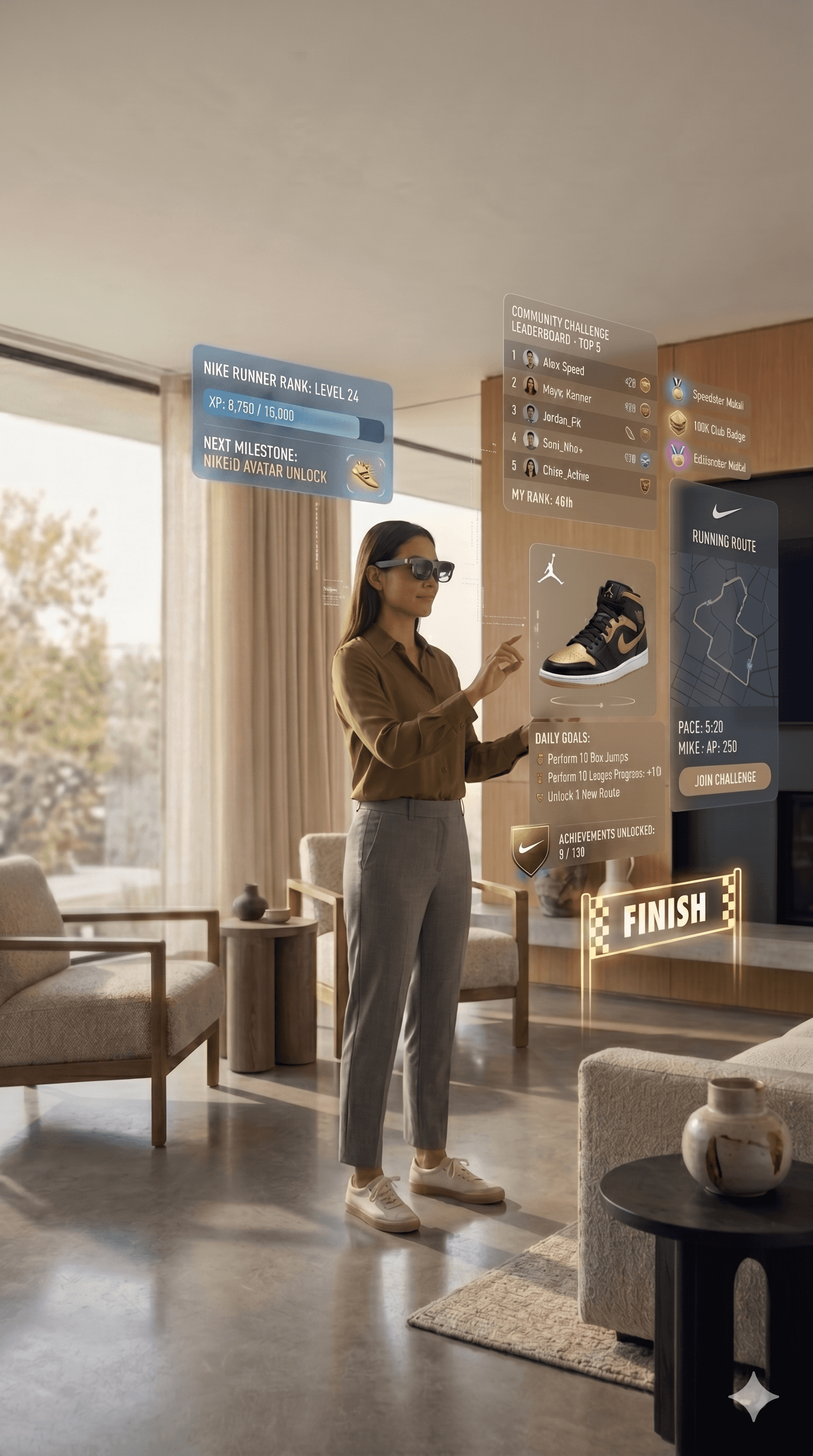
Meta is pushing the category toward smart glasses through Ray-Ban Meta and Ray-Ban Display, making AI, notifications, camera capture, navigation, reminders, and glanceable information feel closer to normal eyewear than traditional computing. XREAL is helping define another path through lightweight display glasses and Android XR, including Project Aura, which points toward spatial content that can be more portable, more comfortable, and more connected to the broader Android ecosystem. Apple has already established the language of spatial computing with Vision Pro, and the industry is watching closely for how that philosophy eventually moves into lighter Apple glasses.
These device paths are different, but they all point in the same direction. XR is becoming less about strapping into a separate world and more about adding useful, playful, spatial layers to the world people already occupy.
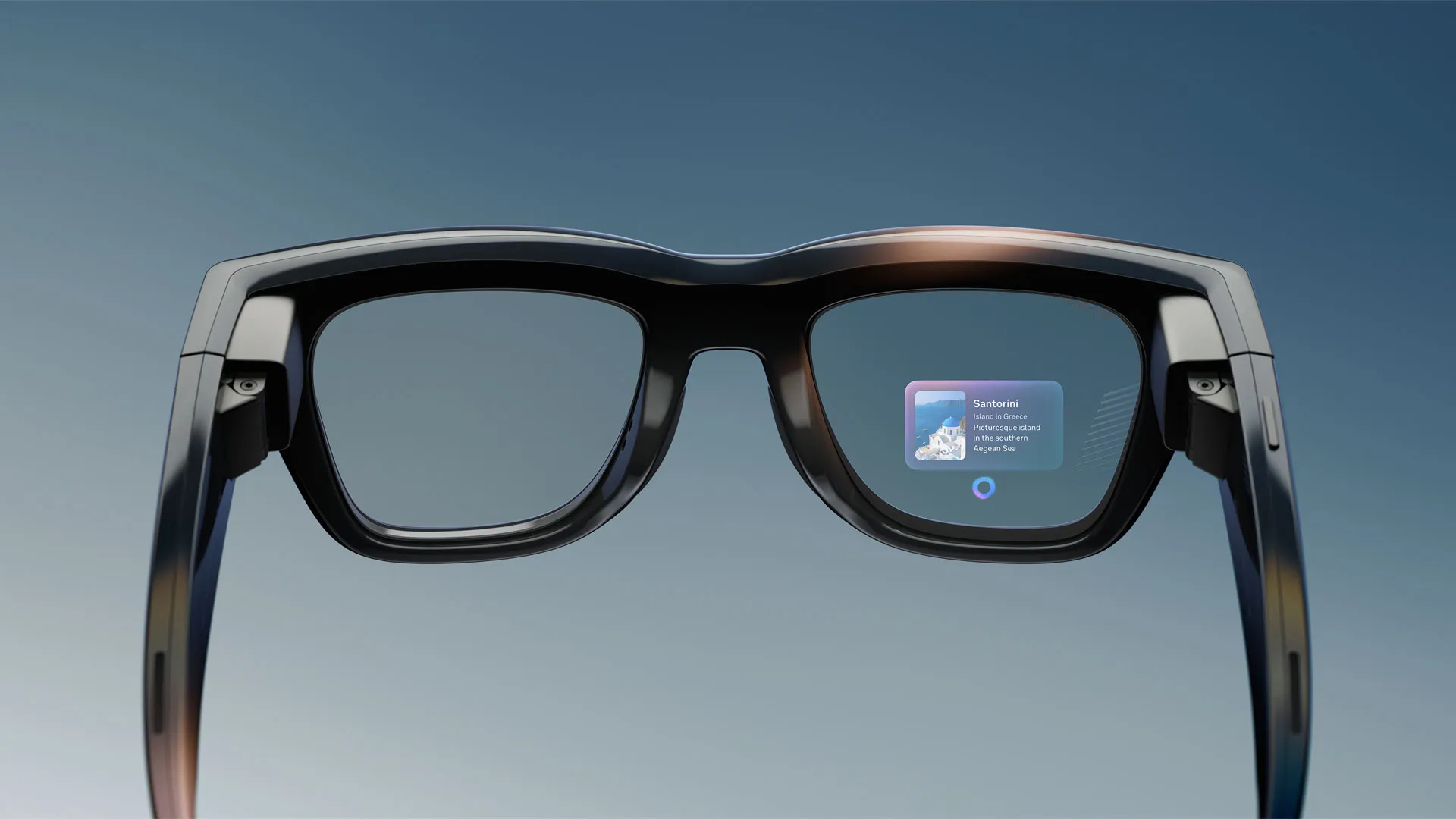
That shift matters because hardware changes content. A heavy headset encourages one kind of experience. Lightweight glasses encourage another. If the device becomes something people can wear more often, the content has to become easier to enter, easier to understand, and easier to return to throughout the day.
The Problem With Replacement Thinking
The early story of virtual reality was built around total immersion. That made sense. The technology was new, and the most obvious way to prove its power was to transport people into fully digital spaces. The headset became a doorway. The promise was simple: the real world goes away, and a new one appears.
But that framing also created friction. For many people, entering VR still feels like a commitment. It can feel isolated. For casual users, families, and people who do not already identify as gamers, that learning curve can be enough to keep XR from becoming a daily habit.
The next phase of the category has to feel easier than that. It has to feel more natural, less demanding, and more connected to the spaces people already live in. The question is no longer, “How do we make someone forget where they are?” The better question is, “How do we make where they are more interesting?”
Designing for Reality Changes Everything
That shift changes everything about design.
When an experience is built for the real world, the room is no longer just a boundary. It becomes part of the product. A table or wall can become the perfect objects for a trickshot. A couch can become the perfect seat for a quick session. A small patch of floor can become a play space. The user’s environment becomes part of the level design, part of the emotional context, and part of the reason the experience feels personal.
This is why mixed reality is such an important step for XR. Passthrough and spatial anchoring are not just technical features. They are design principles. They allow digital objects to exist with position and purpose inside a physical environment. The best use of those tools is not to fill every surface with information. It is to place the right digital object in the right real space, at the right scale, with the least possible friction.
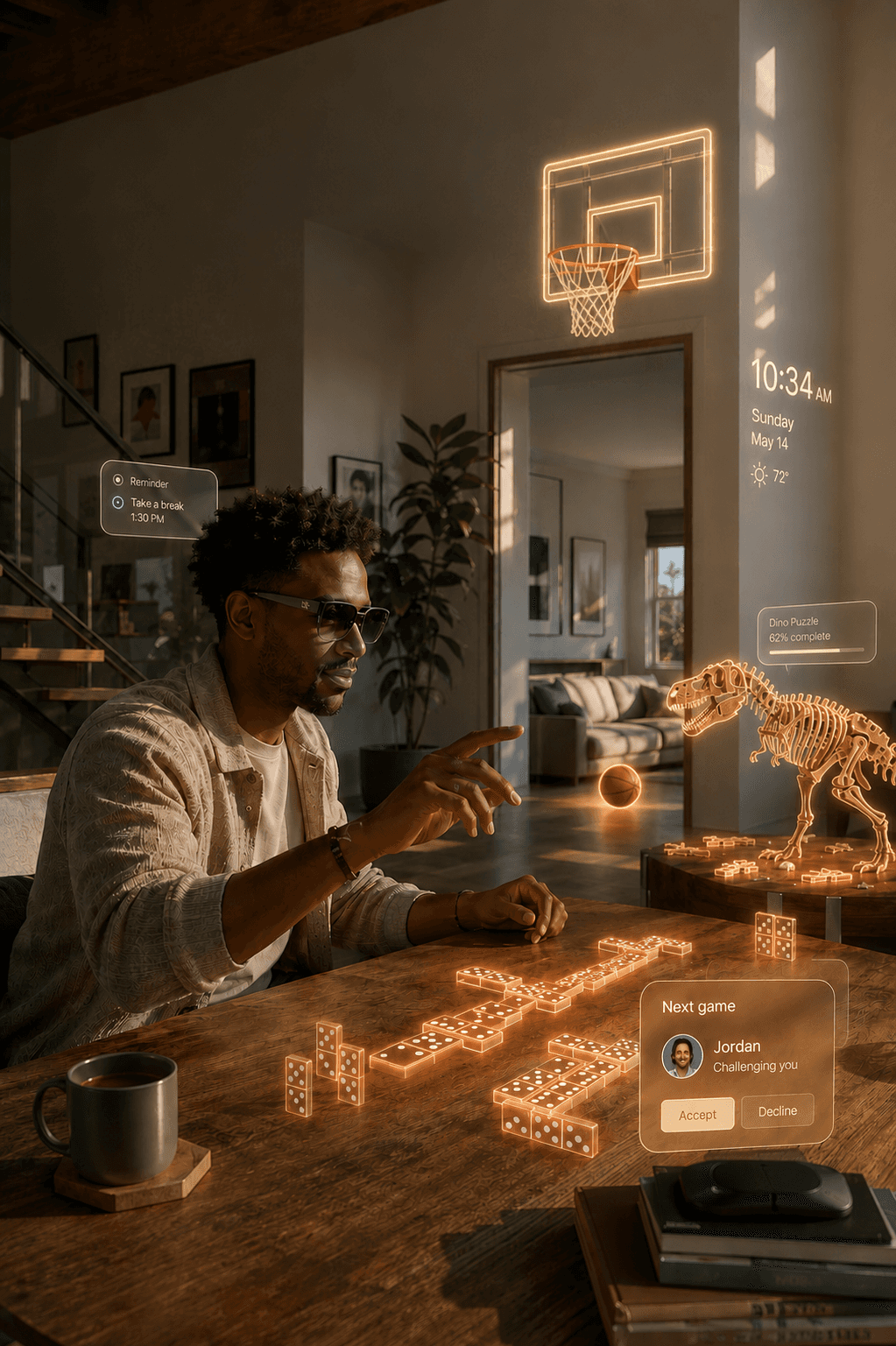
A virtual basketball hoop anchored in your living room should not feel like a complicated simulation. It should feel like a hoop. A digital domino set on your table should not need a long tutorial. It should feel like something you can pick up, rotate, and place.
Comfort Is a Product Strategy
Designing for reality also changes session length and comfort. For many people, the future of XR will not be defined by two hour isolated sessions. It will be defined by small, repeatable moments that fit into daily life. A few shots before dinner. A tabletop game with friends. A short puzzle. A shared experience with a child. A practical overlay during work. A playful interaction that lasts five minutes but creates a memory.
This is where comfort becomes strategy. Seated play matters. Short sessions matter. Simple onboarding matters. Clear user experience matters. These are not compromises for casual audiences. They are the conditions that allow XR to become normal.
The Emotional Power of Your Own Space
There is something emotionally different about digital experiences that happen in your own space. A fully virtual arena can be beautiful, but a hoop floating in your room carries a different kind of meaning. It transforms something familiar. It turns an ordinary environment into a place of play. Your living room becomes the court. Your kitchen becomes a challenge space. Your table becomes a shared surface. Your home becomes part of the experience.
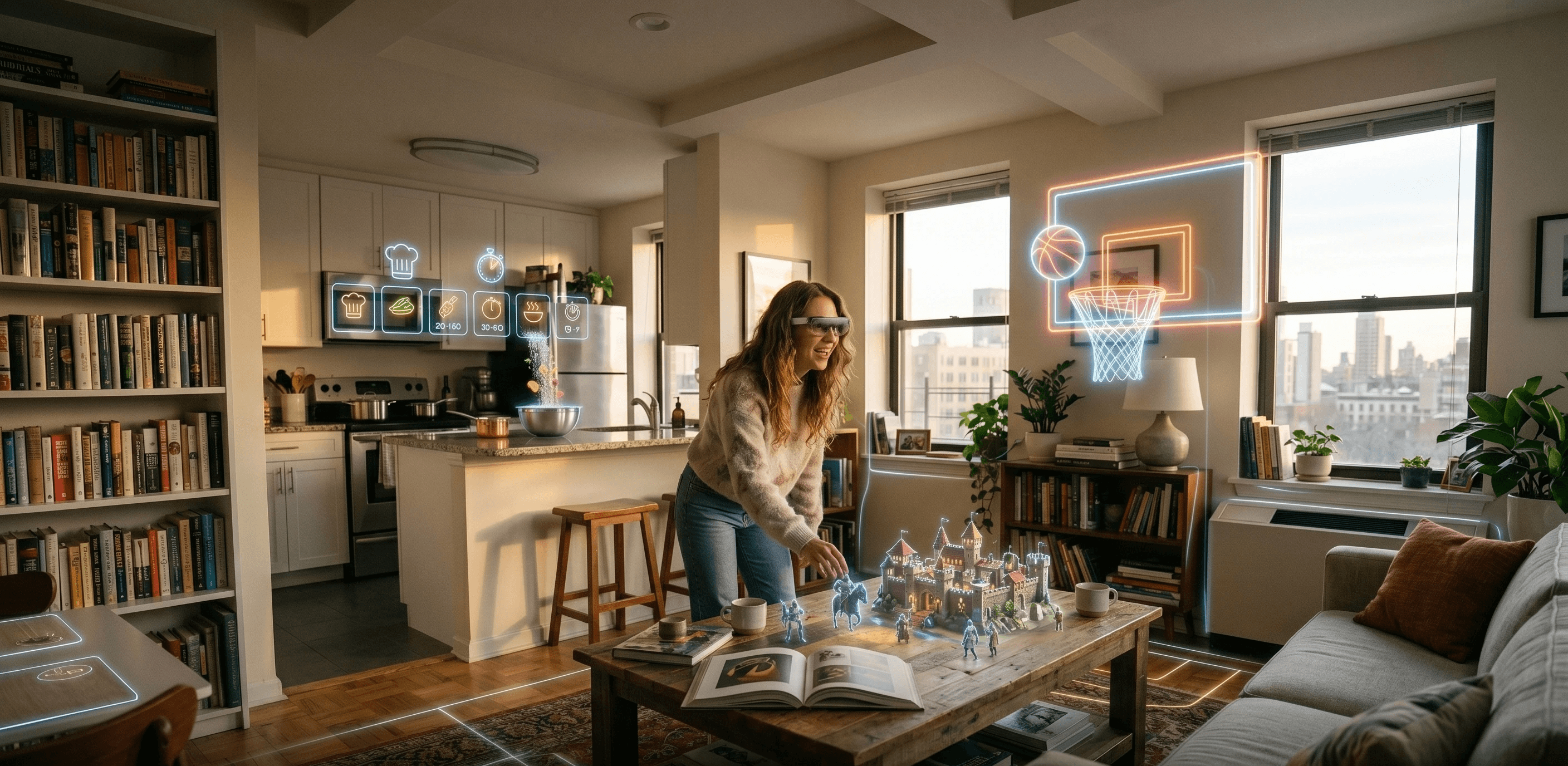
That emotional connection is important. People return to experiences that feel like they belong to them. A fully virtual world can be impressive, but it can also feel disposable if it is disconnected from everyday life. Mixed reality has the ability to make digital content feel personal because it lives where you live. It does not ask you to abandon your environment. It asks you to see more possibility inside it.
That is a very different psychological proposition.
Familiar Behavior Is the Onramp
It is also where familiar behavior becomes a competitive advantage. The more an XR experience mirrors how people already play, gather, compete, learn, or explore, the less explanation it needs. Basketball already has a language. Tabletop games already have a social rhythm. Building a skeleton piece by piece already makes sense as a physical puzzle. These behaviors do not need to be invented. They need to be translated carefully into spatial form.
The mistake would be to assume that XR adoption depends on making everything feel futuristic. In many cases, the opposite is true. The more advanced the technology becomes, the more familiar the experience should feel. People do not need more complexity. They need better magic. The kind that feels obvious once it works.
Why Everyday XR Matters Now
That is why the industry’s movement toward lighter headsets, smart glasses, natural input, and everyday use cases matters so much. As devices become more wearable, the content model has to evolve with them. Experiences designed only for standing, isolated, high intensity sessions will not define the entire category. The next wave will favor interaction models that are glanceable, comfortable, spatial, and easy to enter and exit.
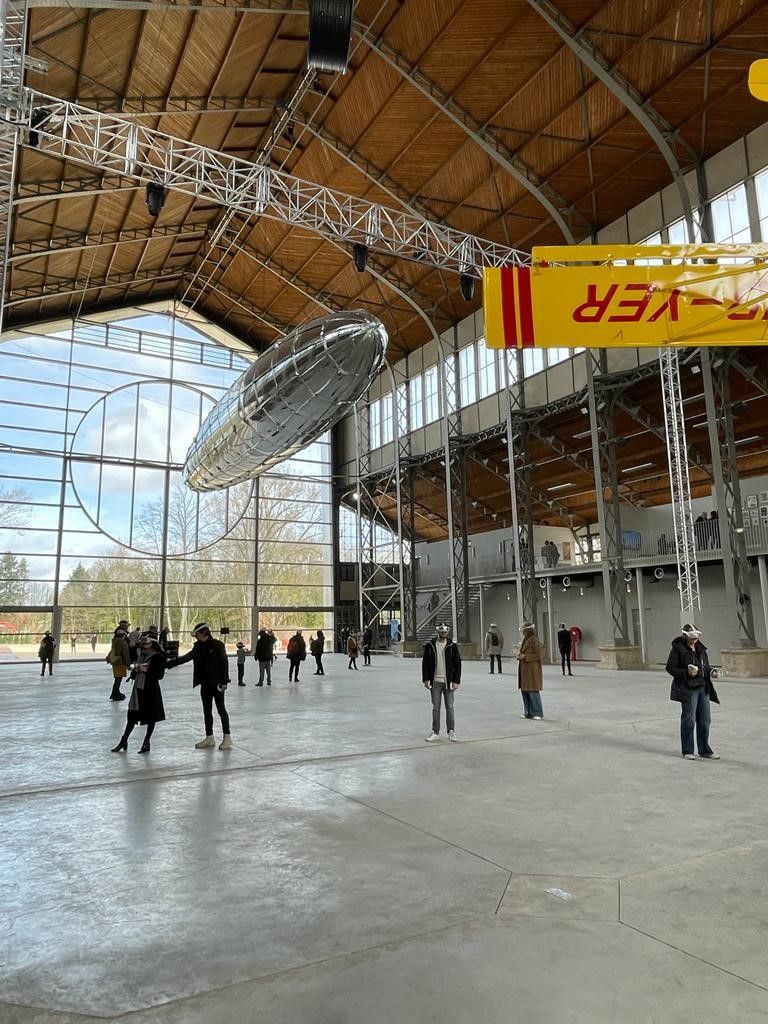
This future will not be dominated only by the biggest virtual worlds. It will also be shaped by experiences that respect people’s time, posture, space, and attention. Games that can be played from a couch in mixed reality. Social experiences that happen around a table. Creative tools that respond to hands. Learning experiences that let people manipulate ideas physically. Brand activations that feel participatory rather than promotional. Cultural experiences that make a real site more vivid rather than covering it up.
Extending Reality Unlocks Scale
This is the practical path to scale. XR grows when more people can understand it quickly. It grows when the first interaction feels natural. It grows when a parent, a child, a casual player, a sports fan, a museum visitor, or someone who has never considered themselves a gamer can put on a device and immediately know what to do.
The next mass audience for XR will not be won by asking everyone to become power users. It will be won by lowering the learning curve without lowering the imagination. It will be won by designing experiences that are simple enough to enter, but rich enough to return to. It will be won by respecting the real world as the foundation, not treating it as something to erase.
For Realcast, this is not only a content strategy. It is a product philosophy. The most durable XR experiences will not be built around novelty alone. They will be built around behavior. They will take things people already love, understand, and repeat, then make those things more expressive through mixed reality.
The Future Is an Added Layer
The next era of XR will not be defined by one device, one headset, or one platform. It will be shaped by a broader shift in how digital content enters physical life.
Meta is moving spatial computing closer to everyday eyewear. XREAL and Android XR are pushing toward lightweight spatial displays. Apple has established a powerful vision for spatial computing with Vision Pro, and the category is waiting to see how that vision evolves into more wearable forms.
But the hardware is only part of the story. The deeper question is what people will actually want to do once digital content becomes available in the spaces where they already live.
At its best, XR is not a screen in front of your face. It is not a replacement world. It is not a technical demo disguised as entertainment. It is a new layer of interaction that makes everyday spaces feel more dynamic.
The future of XR is not about leaving reality behind.
It is about making reality more interactive, more playful, and more alive.
We build XR around human behavior.
We combine game design with real-world deployment

